Aging is inevitable. Skin aging is optional.
European Facelifting Facial | Natural Anti-Aging Results |
Verona NJ
Yolanda's mission to change how women think about skin aging
has been featured in leading media publications
As Seen On
Many women believe that skin aging is mostly genetics. In reality, daily habits, lifestyle, and consistent skincare influence far more than most people realize.
Read the Blog Skin Care Tips & Insights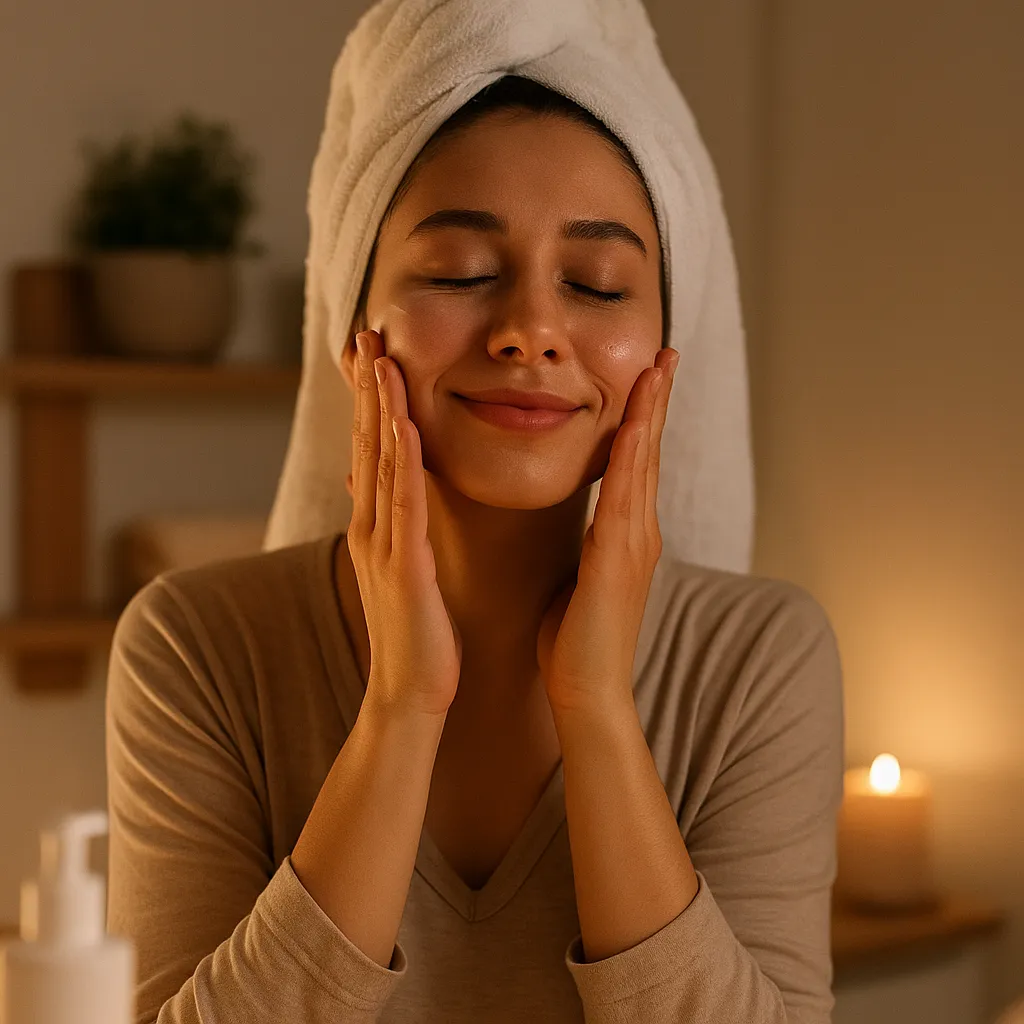
Flattened Cheeks and Sagging Skin? It’s Not Age—It’s a Lack of Circulation
Flattened Cheeks and Sagging Skin? It’s Not Age—You Are Not Smiling Enough
You know the look. That moment when your cheeks no longer bounce back. When your mid-face seems to have deflated or “melted” just a little. You touch your face and wonder, “Is this aging? Is this gravity?”
But what if I told you the reason your cheeks are flattening and your skin is sagging isn’t gravity—it’s stagnation?
It’s not that you’re getting older.
It’s that your cells aren’t getting what they need: movement, circulation, oxygen, and joy.
Your cheeks are messengers.
And they’re trying to tell you something important.
Your Cheeks Are a Window Into Your Overall Health
In both Eastern traditions and modern anatomy, the mid-face tells a clear story. When circulation, lymphatic flow, and muscle tone are working well, your cheeks are lifted, firm, and expressive.
When those systems are underperforming, the cheeks flatten. It's not simply aging. It's physiology.
Here's what causes that flattening:
Sedentary lifestyle — reduced circulation means less oxygen and nutrients reaching skin cells
Shallow breathing — your skin is one of the last organs to receive oxygen; deep breath changes that directly
Sluggish lymphatic flow — fluid accumulates, tissue becomes heavy and loses definition
Loss of facial muscle tone — a face that moves less, expresses less, gradually loses its structure
Chronic fatigue — when the body is running on empty, non-essential functions like skin repair and collagen production are the first to go
The mid-face responds faster than almost any other area when you address these factors directly — through targeted massage, lymphatic drainage, breathwork, and consistent facial exercise.
That's exactly what we work on inside Skin Aging Rx™.
Sagging Isn’t Always Structural—It’s Often Lifestyle
Let's go deeper. Flattened cheeks and sagging skin are frequently the result of what's been happening in your body over time — not just gravity.
That happens when:
Cortisol has been chronically elevated from prolonged stress
Facial muscles have lost tone from underuse or habitual tension
Circulation and oxygen delivery to skin cells have decreased
You've been running on low — skipping rest, skipping joy, skipping breath
These patterns show up on the face before anywhere else. And the good news is the face responds quickly when you begin to address them — with targeted massage, consistent movement, and a routine that actually works with your body's natural rhythms.
How to Restore Volume and Lift to Your Mid-Face Naturally
You don't need filler to lift your cheeks. You need to restore what's actually depleted: circulation, lymphatic flow, muscle tone, and oxygen.
Here's where to start:
1. Breath-Driven Cheek Massage Place your fingertips at the center of your cheeks. Inhale slowly and deeply. As you exhale, glide your fingers outward toward your ears with gentle upward pressure. This combination of breath and manual movement stimulates lymphatic drainage and increases circulation simultaneously. Repeat 10 times every morning.
2. Zygomaticus Muscle Activation Stand in front of a mirror. Begin with a soft, closed-mouth smile, then widen it slowly and intentionally, engaging the muscles around your eyes. Hold for 10 seconds, release fully, repeat 3 times. The zygomaticus major is the primary muscle responsible for cheek lift — like any muscle, it responds to consistent, targeted exercise.
3. Cheek Percussion for Circulation Using your fingertips, tap firmly and rhythmically across your cheeks for 30 seconds. This mechanical stimulation increases local blood flow, delivers fresh oxygen to skin cells, and visibly brightens the mid-face. Do it every morning before applying any skincare product.
4. Feed Your Skin From the Inside Berries, pomegranates, red peppers, and dark leafy greens contain the antioxidants and micronutrients your skin uses to maintain structure and fight inflammation. Skin that is well-nourished internally holds its tone significantly longer than skin that relies on topical products alone.
5. Full-Body Movement Directly Benefits Facial Tone Cardiovascular movement — walking, yoga, any activity that raises your heart rate — increases systemic circulation, which means more oxygen and nutrients reaching your facial tissues. Aim for 20 minutes daily. Your mid-face will reflect it.
Learn to Bring Your Cheeks Back to Life — In Every Session
When your mid-face has lost tone, circulation, and definition, it needs more than a one-time treatment. It needs a consistent practice you can do yourself, with the right technique and professional guidance behind you.
That's exactly what Skin Aging Rx™ delivers.
In each small group class at Speranzi Facial Spa, you'll learn hands-on how to stimulate circulation, activate the muscles responsible for cheek lift, and apply lymphatic drainage techniques specifically to the mid-face. You leave every session with skills you can repeat at home — building results that compound over time.
This is the difference between having something done to your face and knowing how to care for it yourself.
Clients say: "It's like my face woke up — and I finally know how to keep it that way."
The techniques are learnable. The results are real. And the next class is available to you now.